
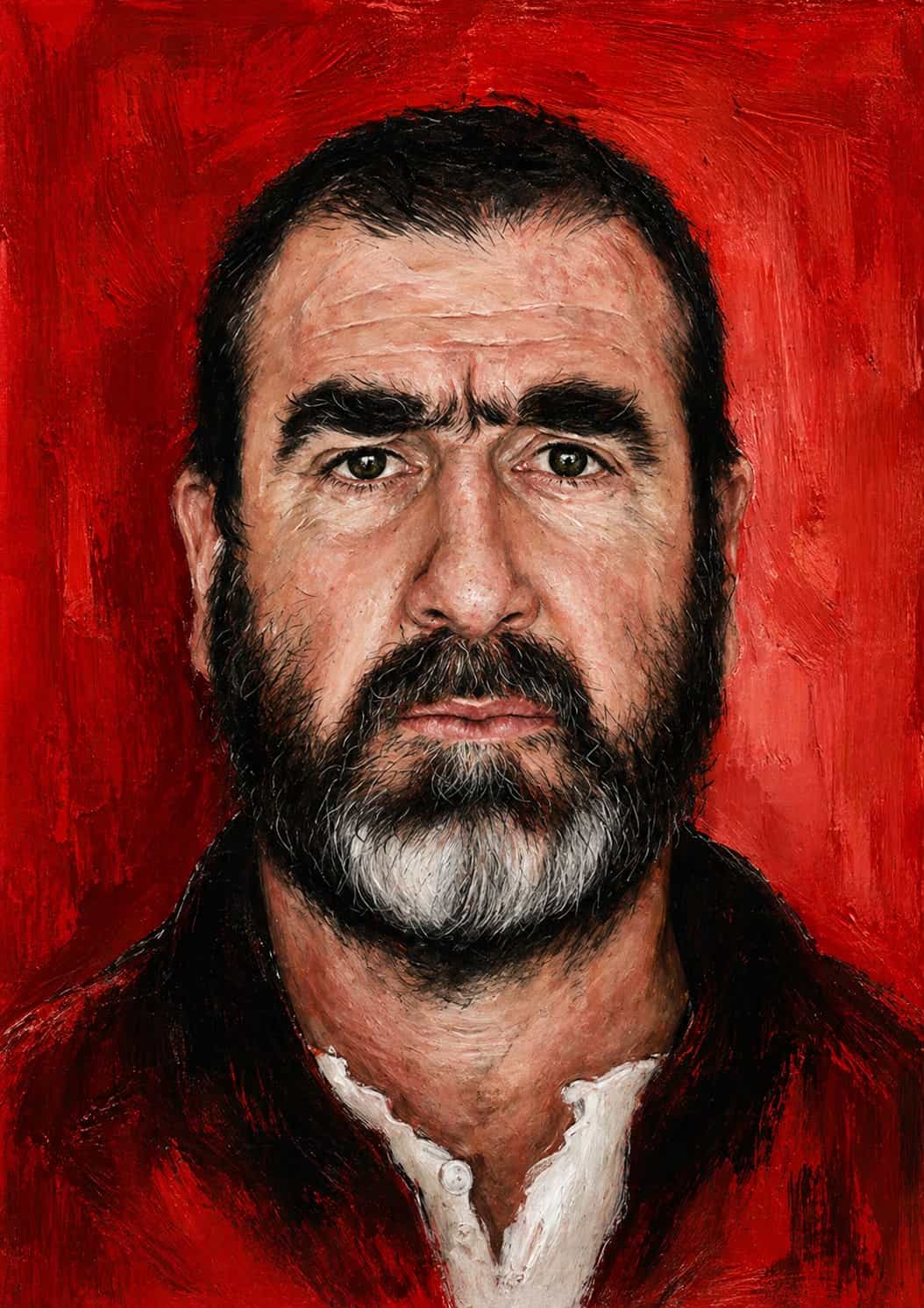
I have never and will never find difference between the pass from Pelé to Carlos Alberto in the final of the World Cup in 1970 and the poetry of the young Rimbaud.
Eric Cantona was born in Marseille and raised in Les Caillols, and by the time English football met him he had already been transferred, suspended, un-retired and misunderstood several times over. England didn't tame him. It built a stage.
He won the last old First Division title with Leeds, then crossed the Pennines in November 1992 for a fee of around a million pounds — a rounding error that redirected the entire decade. At Old Trafford he inherited the number 7 and turned the collar up, and the Premier League discovered it had signed its first leading man.
The moments
1992
The phone call that changed the decade
On 26 November, Leeds sold their most gifted player to their fiercest rivals. Four of the next five league titles went to Manchester — with two Doubles in the middle.
1995
Selhurst Park
On 25 January, sent off against Crystal Palace, he answered a taunting supporter with a kung-fu kick into the stands and was banned for eight months. At the press conference that March he offered one sentence about seagulls, trawlers and sardines — and left.
1996
The King's redemption
Back from the ban, he captained United through the run-in and scored the 85th-minute winner in the FA Cup final against Liverpool on 11 May — a second Double, delivered with the armband on.
1997
Exit, stage left
On 18 May, six days before turning 31 and fresh off a fourth title, he simply retired. No farewell tour, no decline — kings don't do encores.
He remains the club's great modern archetype: the number 7 as attitude. Ask United fans who made the badge feel mythical again, and the answer still comes back in French.